Montessori baby toys for 6-12 months, and what comes next
We make seven toys and nothing else. Each one exists because a specific thing happens to babies at a specific point in the first two years, and because the toy that suits that moment is usually simpler than the shelf suggests. A newborn tracks slow movement. A six-month-old grasps and lets go. A nine-month-old fills a container and empties it again, fifty times, with total concentration. A one-year-old discovers that feet cause sound. Those four facts shaped this catalogue more than any theme did.
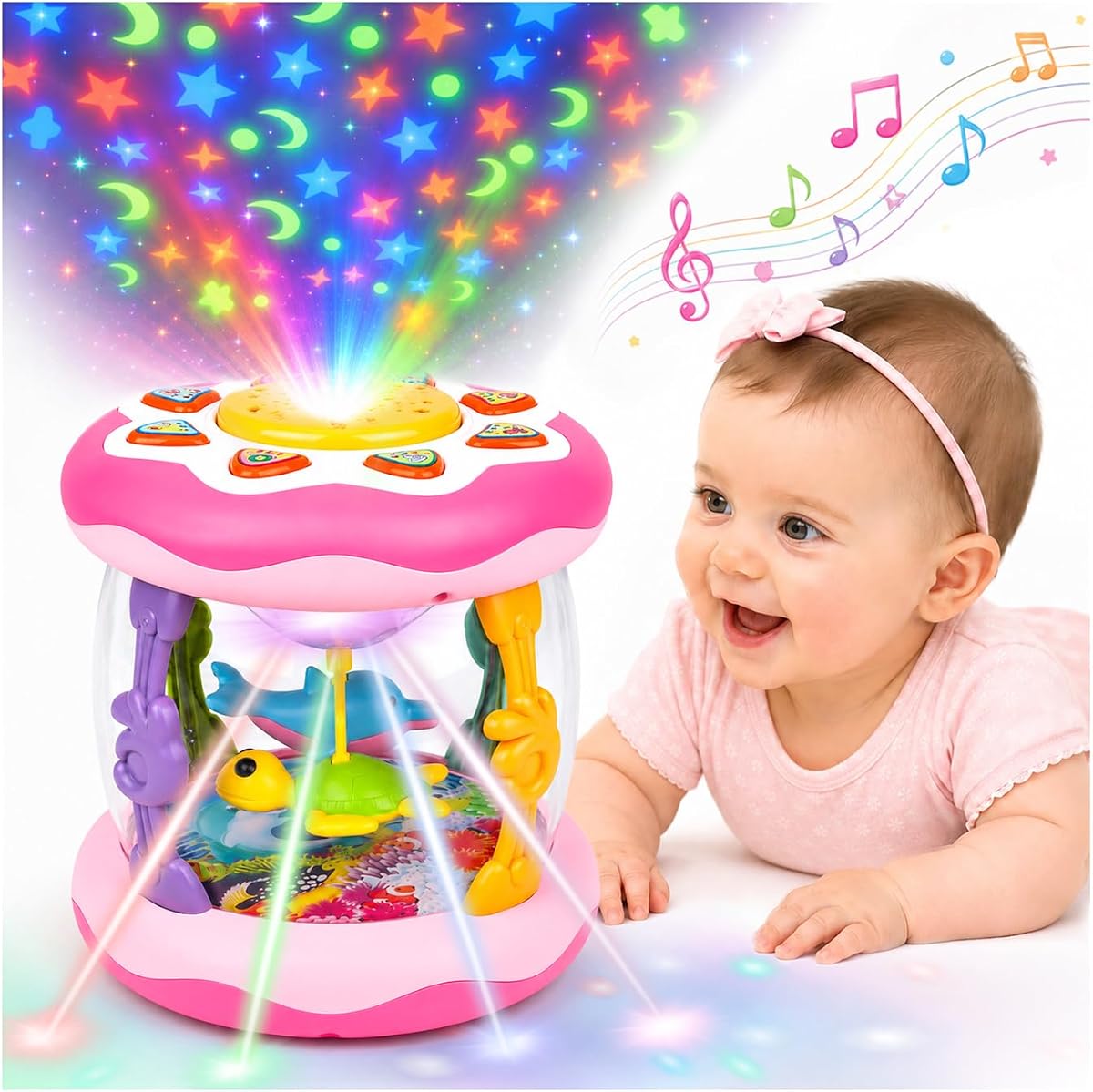
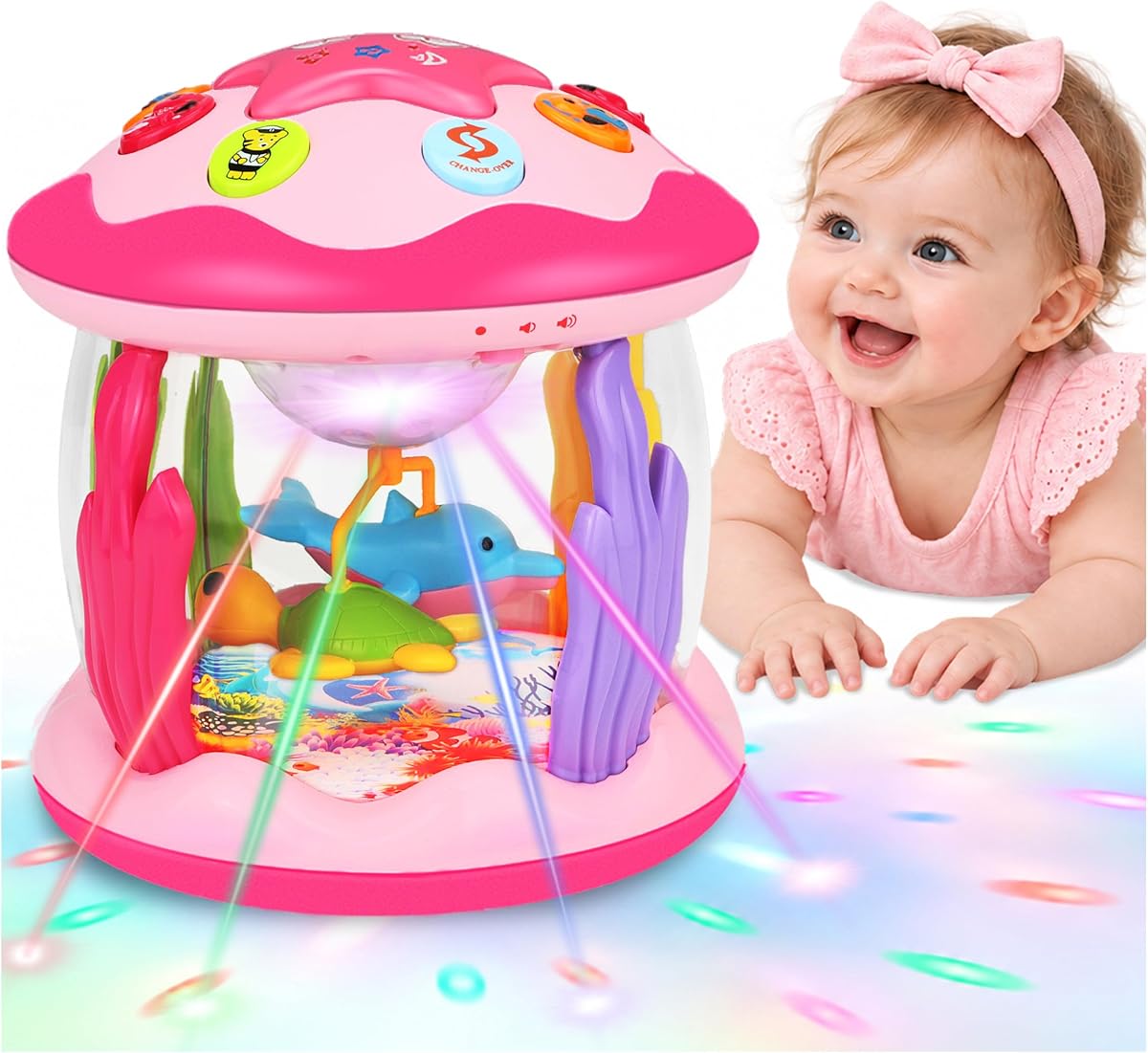
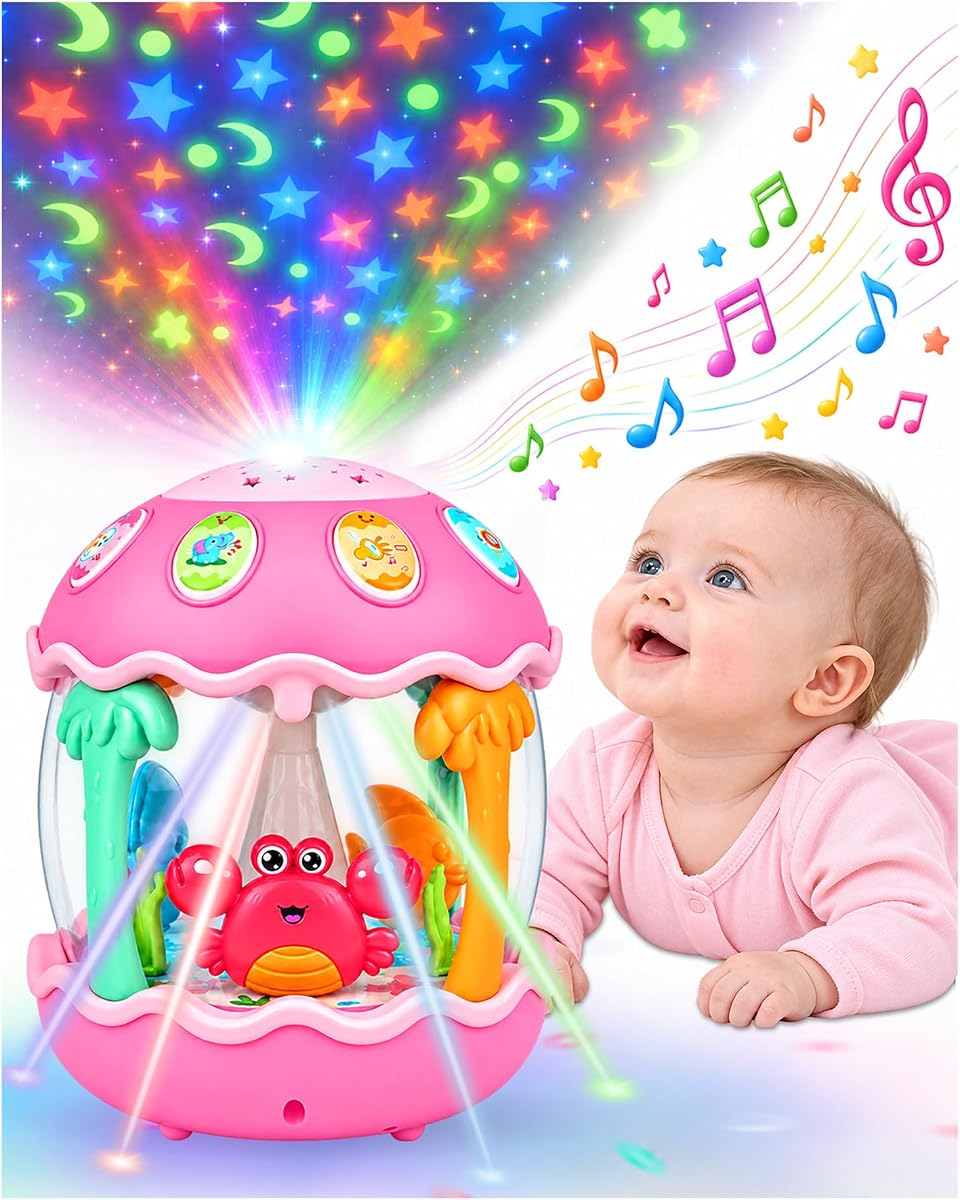
Three of our toys are ocean projectors. They rotate sea creatures through a lit dome and roll on wheels, which makes them unusual in that a single object keeps earning its place: first as something to watch during tummy time, then as something to reach for, then as something to chase across a rug once crawling arrives. Parents who dread tummy time generally find that movement and light buy more minutes than anything else will, and extending those minutes is the one job these toys do exceptionally well.
What the Montessori label does and does not promise
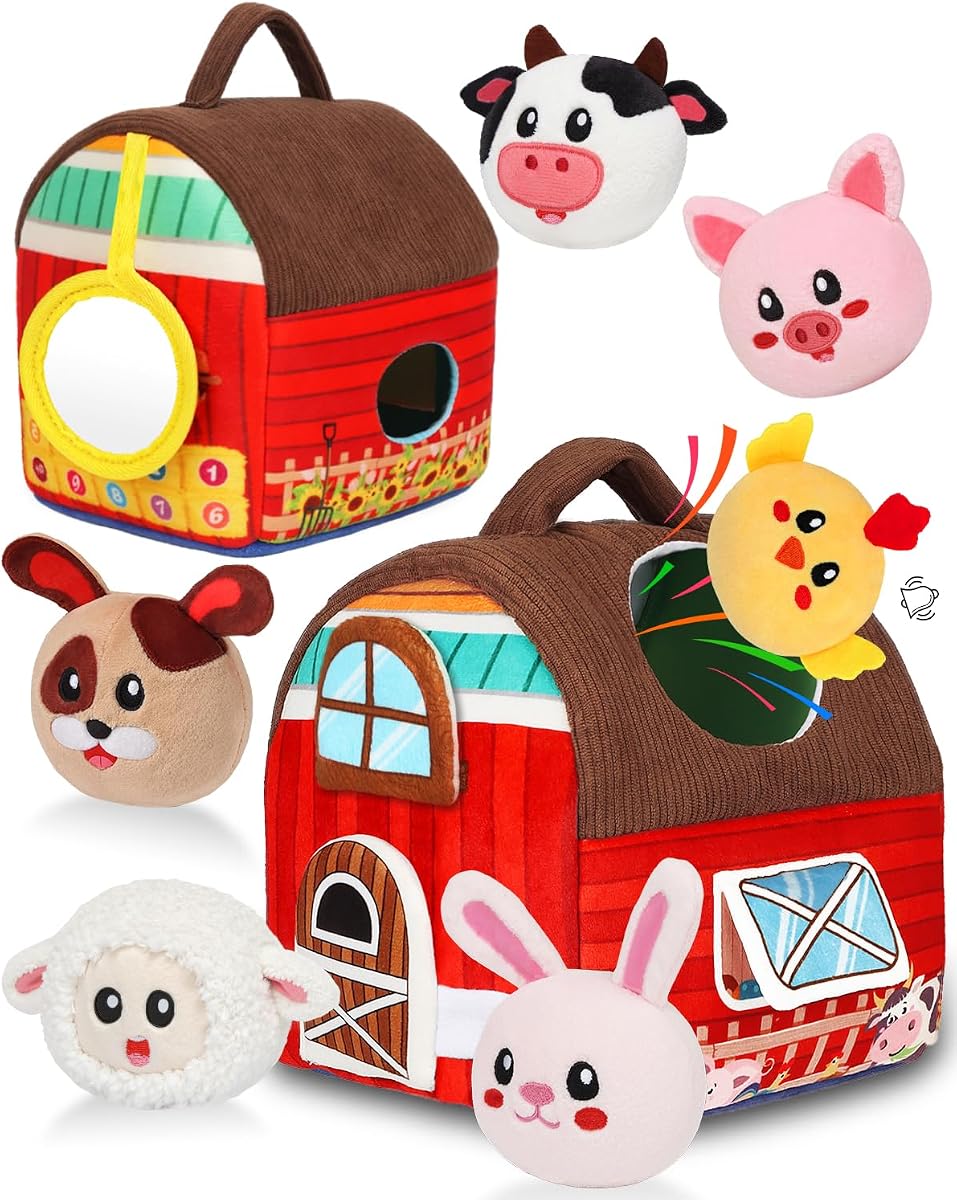
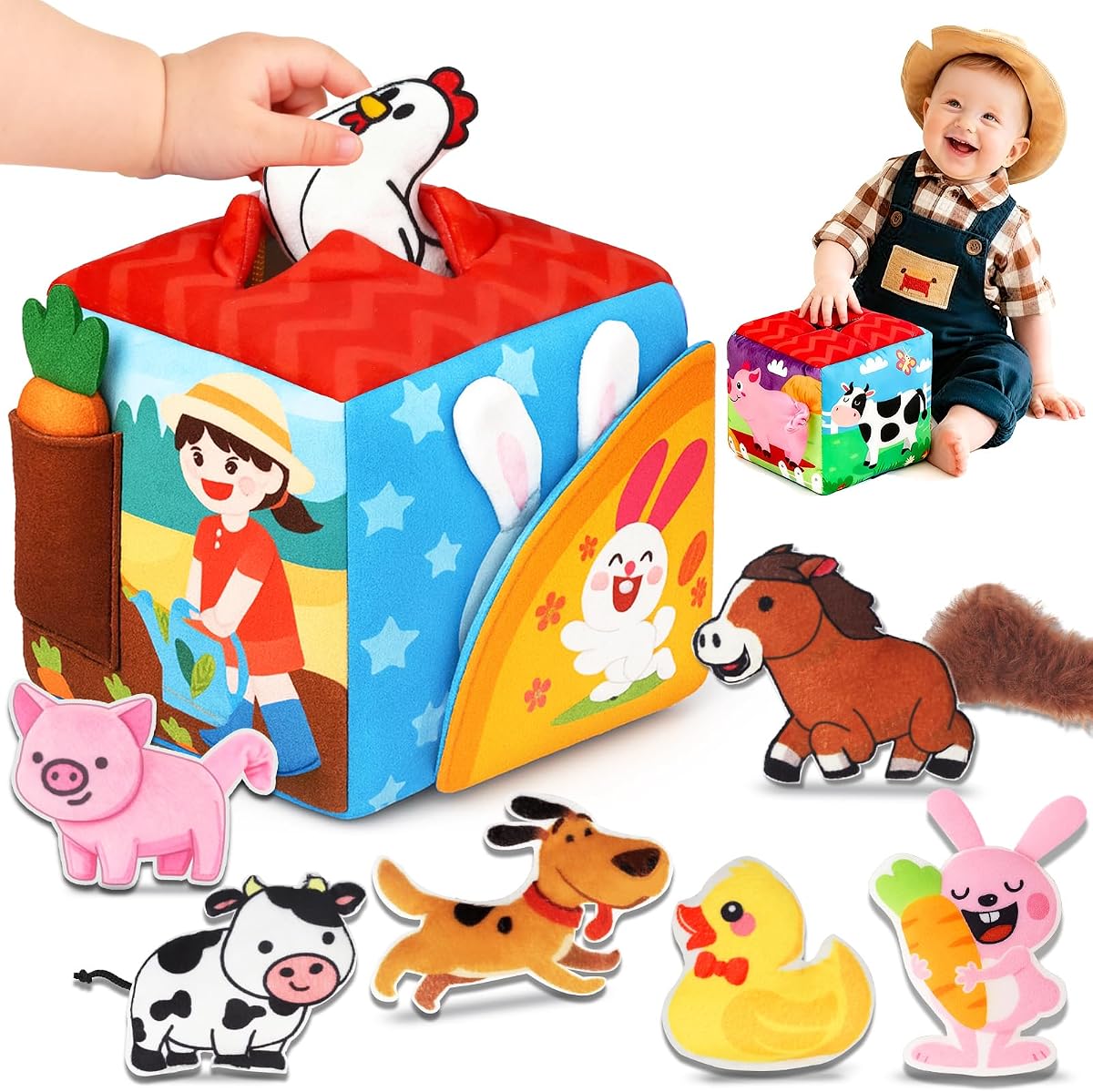
A fair amount of what is sold as Montessori is simply made of wood. The approach actually asks something narrower: that a toy teach one skill at a time, that it point at the real world rather than away from it, and that a child be able to work it without an adult starting it for them. Our barn and our sensory box meet that standard comfortably. They hold objects a baby can name, each with one clear property, and nothing about them needs switching on.
Our projectors meet part of it and we would rather say so than pretend. A toy with batteries and a speaker is not a Montessori material in the strict sense. What it is, honestly, is the thing that gets a reluctant baby through tummy time, and most families we hear from run a mixed shelf: quiet textured objects for most of the day, one toy that glows and moves for the stretch when nothing else works. If you want the full argument, our guide on what makes a toy Montessori lays it out without the marketing.
Choosing by skill rather than by age
Age ranges printed on boxes are wide because babies vary, and buying by month is the most common way to end up with a toy that sits unused for a season. Buying by skill is more reliable. If a baby is not reaching yet, choose something that moves and lights up and place it just past their fingertips. If they have started grasping and mouthing everything in range, choose soft objects with different textures and sounds they can produce themselves. If they are emptying drawers, choose a container with things in it. If they are pulling to stand and walking along furniture, choose something that responds to feet.
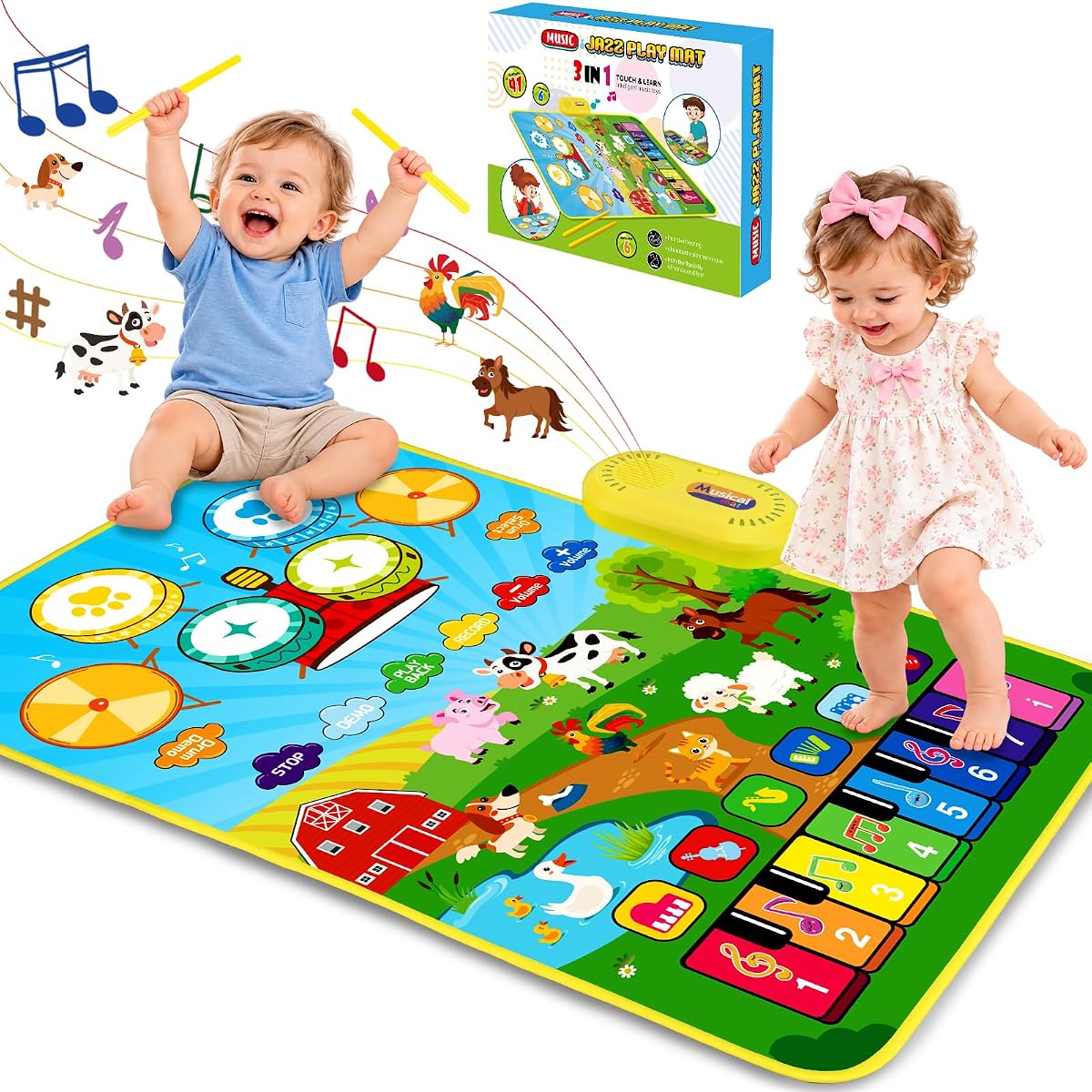
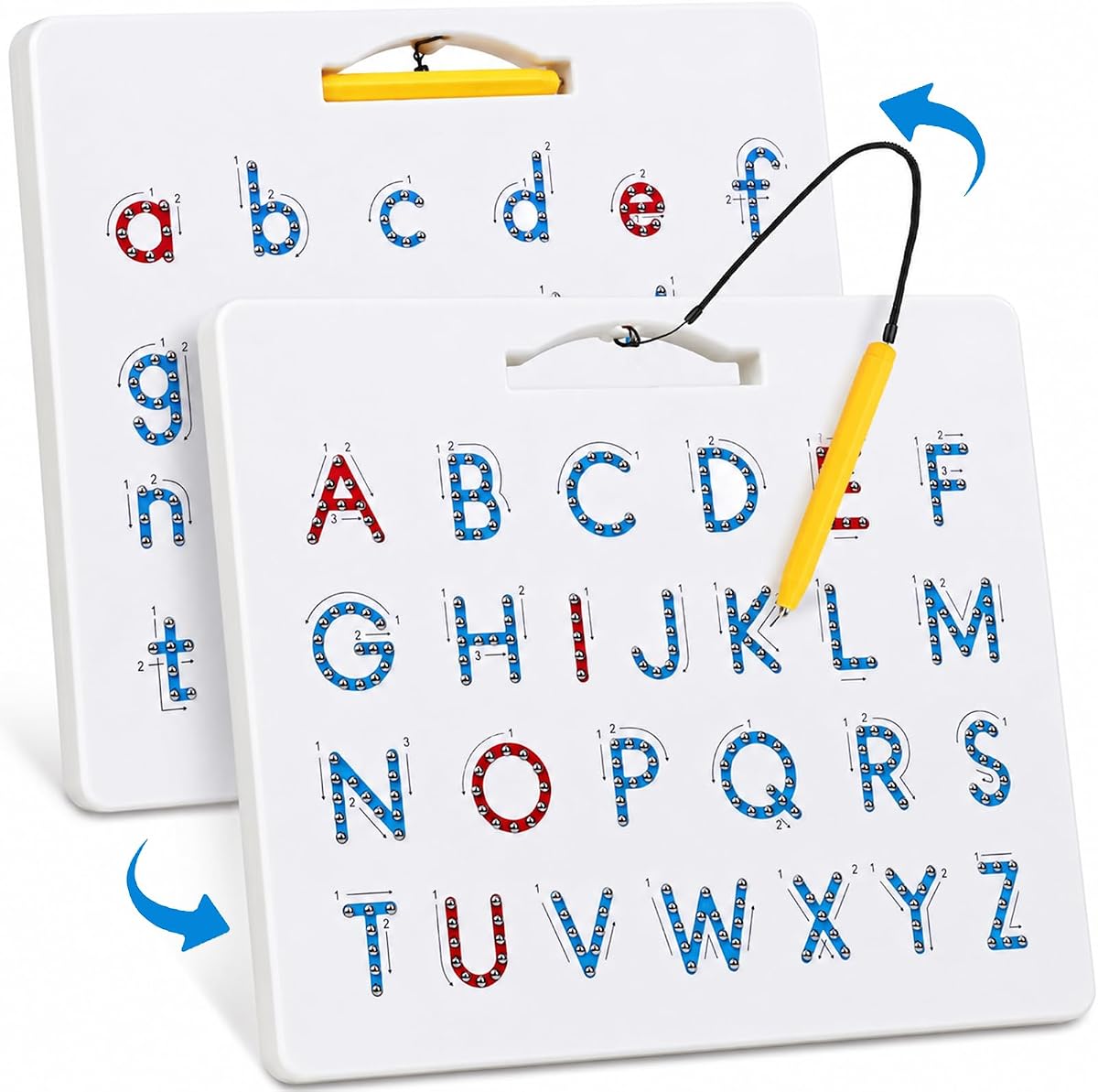
That progression is why our range looks the way it does. The projectors cover the months of looking and reaching, the barn and the sensory box cover grasping and filling, the music mat covers the first year of walking, and the magnetic letter board waits until a child can hold a stylus and wants to make marks on purpose. Nothing overlaps more than it has to, and nothing is here twice in a different colour.
How buying works
Our toys are stocked and shipped by our partner store, which handles pricing, delivery and returns. The price shown beside each toy here is the one we recorded when we last refreshed this catalogue, and the store's own page is always the current figure. Everything in the range is in stock as this page is published.
Montessori baby toys for 6-12 months: how we read the label
Most parents who go looking for montessori baby toys at 6 to 12 months old have the same picture in their head: a wooden ball, a set of rings on a peg, a puzzle with one shape in it, a basket of real objects with nothing flashing. That picture is accurate. The approach asks a toy to teach one skill, to point at the real world, and to work without an adult starting it. Our barn and our sensory box meet that standard. Our projectors meet part of it, and we would rather write that down than pretend otherwise.
What the label does not promise is wood. Material is a habit of the tradition, not the rule inside it. A soft set of textured animals that a baby can grasp, transfer and drop is closer to montessori practice than a wooden toy that plays a tune when you shake it. We care about whether a baby can work the object alone, and whether the thing it teaches is one thing rather than six.
What a baby can do at each age in the first year
Buying by month is the most common way to end up with a toy that sits unused for a season. Buying by skill is more reliable, because the skills arrive in the same order for almost every baby even when the months do not line up.
- Six to seven months old. Tracking is smooth, a hand reaches on purpose, and everything goes to the mouth. Contrast, movement and soft texture matter more than detail.
- Eight to nine months. The grasp becomes fine enough to pick up a single bead, objects move from one hand to the other, and letting go turns deliberate. Stacking and filling start to make sense here.
- Ten to eleven months. Crawling makes the whole world reachable. A ball that rolls away is now a reason to move rather than a reason to cry.
- Twelve months and the second year. Pulling to stand, cruising, and cause and effect play repeated until the adult gives up first.
Our range is laid out along that line on purpose. The projectors cover looking and reaching, the barn and the box cover grasping and filling, the music mat covers the first year of walking, and the letter board waits for a toddler who can hold a stylus and wants to make a mark that means something.
A shelf of six objects beats a box of thirty
The most useful thing we can tell a parent has nothing to do with buying. Six objects on an open shelf, each visible, each with one clear property, will hold a baby longer than a crate of thirty. Rotate two of them every week and the shelf stays new without anything new arriving. A wooden ball, a cup to fill and empty, a mirror at floor height, two board books, one soft set with different textures, and one toy that moves is a complete set for this age.
Concentration is the thing being protected. A baby who is left to repeat an action fifty times is building coordination and attention at the same time, and an adult who intervenes to show the correct way usually ends the work. Put the object in reach, sit back, and let the repetition look boring.
Questions parents ask before buying
Do montessori toys for babies have to be wooden?
No. Wood is common because it is quiet, heavy enough to feel real, and pleasant in a mouth, but a soft object with one honest texture does the same job. What disqualifies a toy is doing six things at once.
How many toys should a baby of this age own?
Fewer than most of us buy. Six out at a time, rotated, is a good working number for infants and still works well into the toddler year.
Are lights and sounds bad for development?
Not in themselves. They become a problem when they are the only thing in the room, because a toy that performs on its own teaches a baby to watch rather than to act. One such toy on a shelf of quiet objects is a reasonable balance.
Quality, and the things we deliberately leave out
We get asked why the range is so small. The short answer is that a catalogue of three hundred baby toys is a catalogue nobody can choose from, and most of what fills one is the same object in a different colour. Seven is what survived. Each one had to encourage something a baby is already trying to do, and had to keep working for more than a season.
The things we do not make are as deliberate. No activity centre that does forty jobs badly. No plastic kit of miniature food. No toy whose main feature is a licensed face. Those sell, and we would rather spend the shelf on a mirror, a set of rings, a cup, a ball and a box of real objects.
A word about wonder, since it turns up in every catalogue including ours. What looks like wonder in an infant is usually concentration: a baby of nine months will turn a wooden egg over for four minutes, finding the edge with a thumbnail, and that is the whole of it. Protecting those four minutes does more for fine motor skills and coordination than any product can, and it costs nothing. If what you take from this site is that the shelf should be small and the room should be quiet, we would call that a good result even if nothing is bought. Learning at this age is not taught and it is not bought; it is what happens when a baby is left alone with something worth exploring.